

If you’re hearing scratching, thumping, or chirping sounds in your attic during spring, there’s a high chance you’re dealing with a raccoon family not just a single animal.
In Ontario, raccoon activity follows a very predictable seasonal pattern. From years of hands-on wildlife removal work, we consistently see a surge in attic infestations during early spring right when raccoons are having babies.
Understanding this timeline is critical. Removing raccoons at the wrong time can separate babies from their mother, leading to serious odor issues, property damage, and even legal complications.
Raccoon Breeding Season in Ontario
Raccoons typically mate between January and March in Ontario.
During this period:
- Male raccoons travel long distances searching for females
- Female raccoons begin scouting safe, warm nesting sites
- Homes become prime targets due to heat and protection
This is often when we get early inspection calls from homeowners noticing roof activity.
When Are Baby Raccoons Born?
Baby raccoons are usually born between March and May, with April being the peak month.
Key facts:
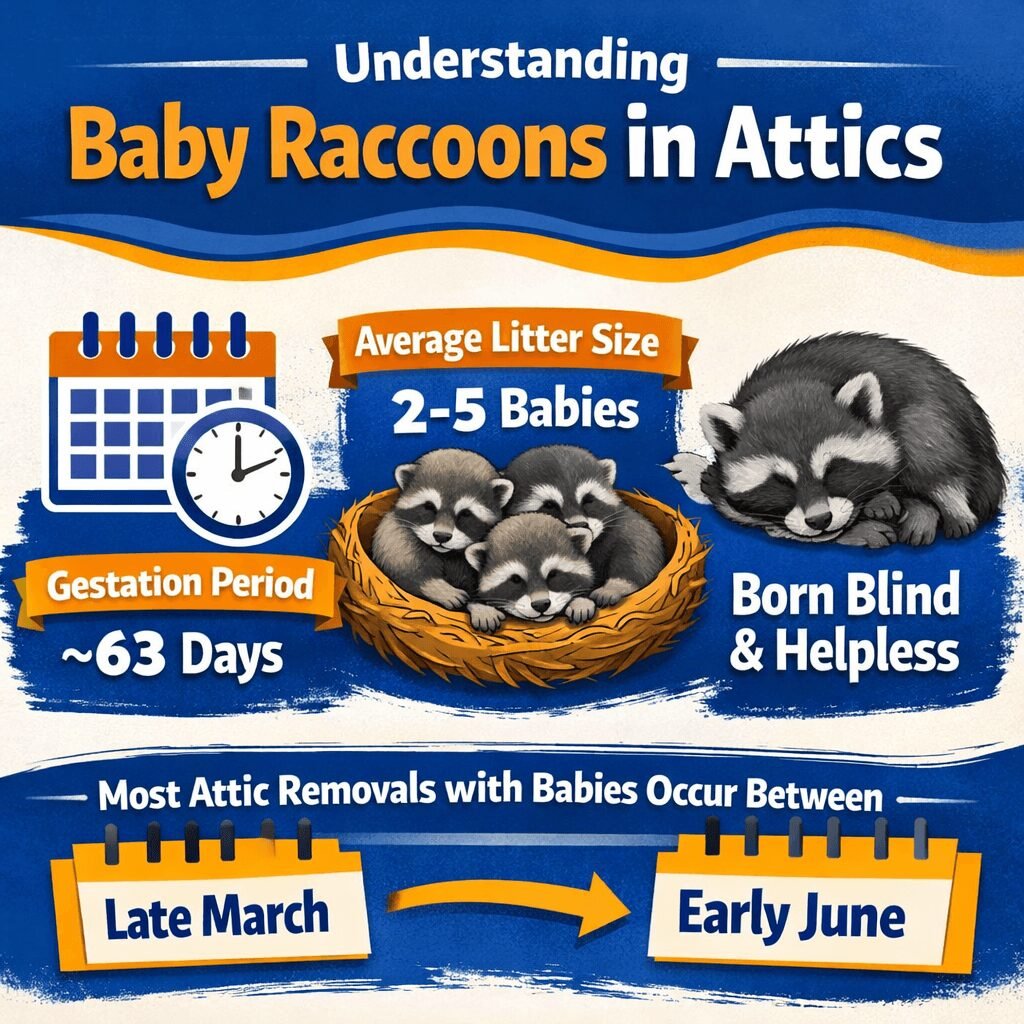
- Gestation period: ~63 days
- Average litter size: 2–5 babies
- Babies are born blind and completely dependent on the mother
From our field experience, most attic removals involving babies happen between late March and early June.
Where Do Raccoons Have Their Babies?
Female raccoons look for enclosed, secure environments to give birth—and urban homes provide the perfect conditions. In our experience, attics are by far the most common nesting location because they offer heat, safety, and minimal disturbance.
Common nesting locations:
- Attics (most common)
- Roof vents
- Chimneys
- Soffits and roof edges
- Under decks and sheds
Signs You Have Baby Raccoons in Your Home
Many homeowners don’t realize they have raccoon babies until the noise becomes persistent. The sounds are very different from adult raccoons.
From real job experience, baby raccoons often sound like birds or kittens.
Common signs:
- Chirping, whining, or high-pitched noises
- Scratching or movement in attic
- Daytime activity (mother leaving/returning)
- Visible damage to vents or shingles
- Strong odor from attic
Why Spring is Peak Season for Raccoon Problems?
Spring is the busiest season for raccoon infestations and also the most sensitive time for removal. Female raccoons are under pressure to find a safe nesting space, and once babies are born, they cannot relocate them easily.
From our experience, spring jobs require extra care because improper handling can separate the babies from the mother.
Why infestations increase:
- Homes provide warmth and protection
- Babies are immobile, so nests stay longer
- Mothers become highly protective
- Damage increases over time
What to Do If You Find Baby Raccoons
This is where most homeowners make costly mistakes. Handling raccoon babies incorrectly can lead to severe damage and prolonged infestation.
❌ What NOT to do
- Do not seal the entry hole
- Do not remove babies yourself
- Do not use traps or poison
⇒ What to do:
- Call a professional wildlife removal services provider
- Ensure humane removal with baby reunite process
If you’re in a high-risk area, it’s best to contact experts for raccoon removal Toronto to handle the situation safely.
Is It Legal to Remove Baby Raccoons in Ontario?
Ontario wildlife laws require humane treatment of animals, especially when dealing with species like raccoons that commonly live in urban areas.
👉 You can review the official guidelines here:
Ontario Wildlife Removal Rules (Official Guide).
Key legal points:
- Killing raccoons is not allowed in most residential situations
- Relocating wildlife far distances is prohibited
- Animals must be removed using humane methods
- Baby raccoons must not be separated from their mother
How Long Do Baby Raccoons Stay in the Nest?
Understanding this timeline helps determine urgency.
Growth timeline:
- 0–6 weeks: Stay inside nest
- 6–8 weeks: Begin exploring
- 10–12 weeks: Become independent
How to Prevent Raccoons from Nesting in Your Home?
Prevention is one of the most important steps after removal. From our experience, homes that aren’t properly sealed often face repeat infestations within the same season.
Prevention steps:
- Seal all roof entry points
- Install heavy-duty vent covers
- Trim tree branches near roof
- Secure garbage bins
Long-term protection requires professional attic proofing services to fully secure your home.
Cost of Raccoon Removal in Ontario
The cost of raccoon removal varies depending on the situation.
Typical range:
- $300 – $1500+
Factors affecting cost:
- Number of raccoons
- Presence of babies
- Damage severity
- Repairs and proofing required
👉 Spring removals are usually more complex and slightly higher in cost.
Conclusion
Raccoon baby season in Ontario runs from March to May, with peak activity in April. This is when most homeowners experience attic infestations. From our field experience, early detection and proper removal make a significant difference in cost, damage, and safety.
If you suspect raccoons in your home, taking action early ensures a safe and effective solution—before the problem escalates.
What month do raccoons give birth in Ontario?
Most raccoons give birth in April, but the season ranges from March to May.
How many babies do raccoons have?
Typically 2 to 5 babies per litter.
Are raccoons aggressive when they have babies?
Yes, mother raccoons are highly protective and can act aggressively.
Can I remove baby raccoons myself?
No. It is unsafe, often illegal, and can worsen the problem.
How long do raccoons stay in attics?
Usually 2 to 3 months during nesting season.
