
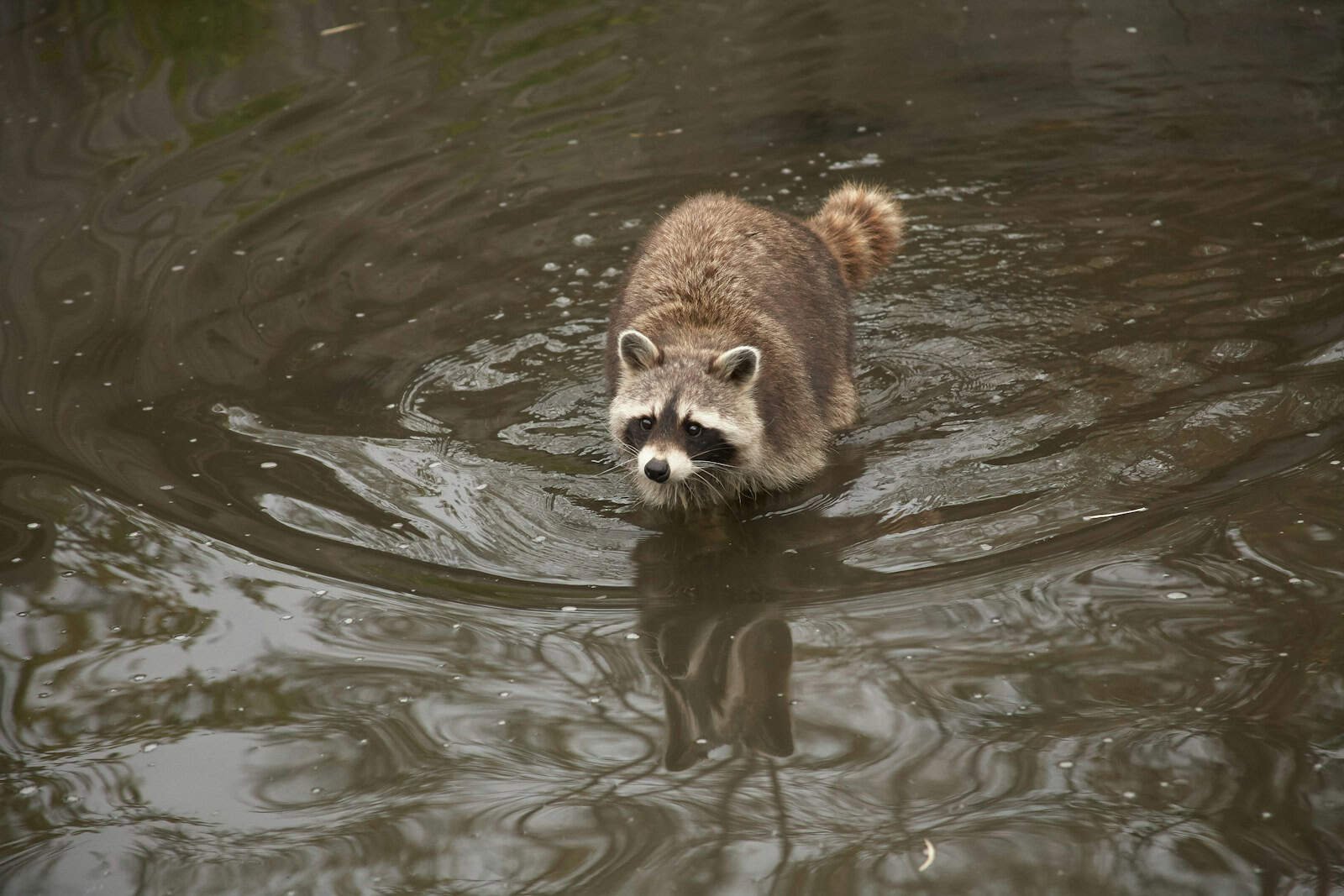
If you live in Toronto, you’ve seen a raccoon. Maybe it was knocking over your green bin at midnight. Maybe it was staring at you from a fence. Or maybe you heard strange noises coming from your attic at night.
Toronto has more raccoons per square kilometre than almost any other city in the world. But most people don’t know much about them where they come from, what they want, or why they keep ending up inside homes.
I’m Maheer Asfar, a licensed wildlife technician. I’ve removed raccoons from over 2500+ Toronto homes in the past 20 years. In this guide, I’ll tell you everything you need to know.
Raccoon — Quick Facts
Procyon lotor
4 – 12 kg
2 – 5 years
2 – 5 (born in spring)
Mostly at night
Up to 100 per km²
Eats almost anything
Very high — top 5% of mammals
So, What Exactly Is a Raccoon?
A raccoon is a medium-sized wild animal that lives across North America. Its scientific name is Procyon lotor, but you don’t need to remember that. What you do need to know is that raccoons are very smart, very adaptable, and very good at living alongside humans.
You can recognize a raccoon by three things:
- The black mask: Dark fur around both eyes like a bandit. This is the most recognizable feature of any raccoon.
- The striped tail: 4 to 10 alternating dark and light rings going all the way down
- The clever paws: Raccoon front paws work almost like human hands. They can open jars, turn door knobs, and unlatch bins
Adult raccoons are about the size of a small dog. They weigh between 4 and 12 kilograms and walk in a slow, hunched way flat-footed, like a bear.
Why Does Toronto Have So Many Raccoons?
Toronto doesn’t just have a lot of raccoons. It has a world-record number of them. In areas like The Annex, Leslieville, and North York, there can be up to 100 raccoons living in a single square kilometre. In the wild, that same area would have fewer than 10.
Why? Because Toronto gives raccoons everything they need to survive and thrive.
- Easy food, every single day: Green bins, compost piles, fruit trees, gardens, and outdoor pet food give raccoons a free, reliable meal — no hunting required.
- Warm, safe shelter: Older Toronto homes especially those built before 1980 have wooden soffits and vents that raccoons can easily break into. Your attic is warmer and safer than any tree hollow.
- No one to hunt them: In Toronto, raccoons have almost no natural predators. Coyotes catch a few, but not enough to control the population.
- A warmer city: Toronto is warmer than the surrounding countryside due to all the buildings and pavement. This means raccoons can stay active longer and survive winters more easily
What Do Raccoons Look Like Up Close?
- Face: Round, with a black mask across both eyes and a pointed snout
- Fur: Thick and greyish-brown. In winter, it gets even thicker to keep them warm
- Tail: Bushy with 4 to 10 dark rings. About 20 to 40 cm long
- Paws: Five fingers on each paw. The front paws are incredibly sensitive almost like fingertips
- Size: About 40 to 70 cm long (body only), plus the tail. Males are bigger than females
- Walk: Slow, flat-footed, and slightly hunched. You’ll often see them waddling along a fence at night
What Do Raccoons Eat?
The short answer: almost everything. Raccoons are what we call omnivores animals that eat both plants and meat.
In the wild, raccoons eat crayfish, frogs, fish, bird eggs, berries, nuts, and small animals. They are known for holding their food near water while they eat. For a long time, people thought they were “washing” their food. We now know they are actually using the water to make their paws more sensitive it helps them feel what they’re eating more clearly.
In Toronto, raccoons eat very differently:
- Green bin contents (their #1 food source in the city)
- Compost and garden waste
- Fruit from trees in your backyard
- Pet food left outside
- Birdseed from garden feeders
- Vegetables from home gardens
This easy, high-calorie city diet is one reason Toronto raccoons are noticeably bigger and heavier than raccoons living in rural areas. They simply eat better.
How Do Raccoons Behave?
Are raccoons active at night?
Mostly, yes. Raccoons are most active after sunset especially in the hours just after dark and just before sunrise. But in cities, they often adjust to human schedules. Seeing a raccoon during the day does not automatically mean it is sick. Mothers with babies often come out during daylight hours to find food while their young are sleeping.
Do raccoons hibernate in winter?
No. Raccoons do not hibernate. But they do slow down a lot during cold weather. They eat heavily in autumn sometimes gaining up to 50% of their body weight in fat. Then during the coldest weeks, they stay in their den and sleep for long stretches. During mild Toronto winters, you may see raccoons active year-round.
Do raccoons live alone or in groups?
Male raccoons mostly live alone. Females live with their babies and sometimes near other female relatives. Young raccoons from the same litter often stay together through their first winter. In dense city areas like Toronto, many raccoons share overlapping home ranges they don’t fight over territory, but they don’t really cooperate either.
Raccoon Activity Through the Year in Toronto
Are Raccoons Dangerous?
A healthy raccoon will almost always run away from you. They are not naturally aggressive toward people. But there are real health risks you should know about.
Call Toronto Animal Services at 416-990-1167 if you see a raccoon doing any of these things:
- Walking in circles or falling over during the day
- Acting aggressive toward people or objects for no reason
- Making strange, high-pitched noises
- Dragging its back legs like they are paralyzed
Why Do Raccoons Get Into Toronto Homes?
This is the question I hear most often. And the answer is simple: your attic is a perfect home for a raccoon. It is warm, dry, quiet, and safe from predators. For a pregnant female raccoon, it is the ideal place to have her babies.
Raccoons don’t just push through walls randomly. They look for weak spots. The most common ways they get in are:
- Rotted soffits: The wooden panels under your roof overhang. On older Toronto homes, these often rot and become easy to push open
- Roof vents: The standard aluminum vents on most homes can be pushed in or ripped off by a determined raccoon in just a few minutes
- Gaps near the roofline: Small openings where the roof meets the fascia board are common entry points as wood shrinks and separates over time
- Open chimneys: An uncapped chimney looks exactly like a hollow tree to a raccoon. It is one of their favourite places to have babies
- Plumbing pipes on the roof: The rubber collar around roof pipes breaks down over time and creates an opening large enough for a raccoon to squeeze through
From 20 Years on the Job
In most cases I have seen, the raccoon did not create a new hole. It found a weak spot that was already there a gap, a rotted board, a loose vent and pushed its way through. Most homeowners had no idea the weak spot existed until the raccoon found it first.
A raccoon is a medium-sized wild animal native to North America. It has a black mask across its eyes, a striped tail, and grey-brown fur. Raccoons are very smart they can open containers, solve puzzles, and remember things for years. Adults weigh between 4 and 12 kg and do very well in cities like Toronto.
Toronto has up to 100 raccoons per square kilometre in some areas. The reason is simple: Toronto gives raccoons everything they need. There is plenty of easy food from green bins and gardens, warm shelter in attics and under decks, almost no natural predators, and a mild climate. It is basically a paradise for raccoons.
A healthy raccoon will almost always run from people. But raccoon droppings can carry a parasite called Baylisascaris roundworm that can make humans seriously ill. Raccoons can also carry rabies and leptospirosis. You should never touch a raccoon or its droppings with your bare hands. If a raccoon is acting strangely, call Toronto Animal Services at 416-990-1167.
Raccoons eat almost anything. In the wild, they eat frogs, fish, berries, bird eggs, and small animals. In Toronto, they mostly eat from green bins, gardens, compost, and outdoor pet food. This easy diet is why Toronto raccoons are bigger and heavier than raccoons living in the wild.
Raccoons are mostly active at night — especially just after sunset and just before sunrise. They do not hibernate, but they slow down a lot during cold winter weeks. The busiest time of year is spring (April to June), when mothers give birth and raise their young. Seeing one during the day is not always a sign something is wrong mothers often come out in daylight to find food.
Raccoons find weak spots in your roof and push their way through. The most common entry points are rotted soffits, roof vents without proper covers, small gaps near the roofline, open chimneys, and broken rubber collars around roof pipes. In most cases, the entry point was already weak before the raccoon found it the raccoon just spotted the problem before you did.
