
A wasp is a winged insect in the order Hymenoptera, closely related to bees and ants. Wasps can be social or solitary, and different species vary in appearance, nesting habits, food, and behaviour. For homeowners, the most useful clues are the type of wasp, where it is active, and whether repeated activity points to a nearby nest.
This guide explains how to identify common wasps, how they differ from bees, where they build nests, why they appear around Toronto homes, what attracts them, and when professional assessment makes sense.
What Is a Wasp?
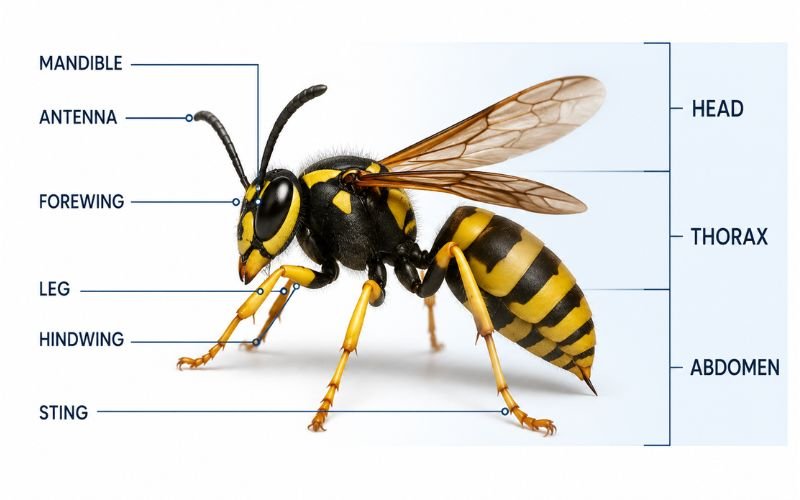
A wasp is a winged insect related to bees and ants. Wasps belong to the insect order Hymenoptera. The group includes social, solitary, and parasitoid species. Some female wasps have a stinger that developed from an egg-laying structure.
Not every wasp lives in a colony. Social wasps share nests with queens and workers, while solitary wasps generally raise their young alone. That difference affects how they behave around homes.
Are All Wasps the Same?
No. Wasps vary in size, colour, body shape, nesting habits, food, and behaviour. Yellow jackets, paper wasps, and bald-faced hornets are common social wasps, while many other species live alone.
Why Identifying the Wasp Matters
Identification can help explain why insects gather around food, flowers, a roof edge, or a wall opening and can narrow down the likely nest location. Body shape, hair, nest type, and behaviour are more useful together than colour alone.
What Does a Wasp Look Like?
Many wasps have slim bodies, narrow waists, and relatively smooth surfaces. Yellow and black markings are common, but not every wasp has those colour. Wasps often look less hairy than bees, although exact appearance varies by species.
How Can You Tell a Wasp From a Bee?
Wasps and bees are closely related, so mistakes are common. Many wasps have a narrow waist and smooth body, while bees often have more visible hair, especially around the thorax. Bees commonly collect pollen, while many wasps hunt insects or spiders for their young. Adult wasps may also feed on nectar, fruit juices, and other sugars.
If you are unsure, avoid disturbing the insect or its nest. A photo taken from a safe distance can help with identification.
Common Types of Wasps Found Around Homes
Yellowjackets
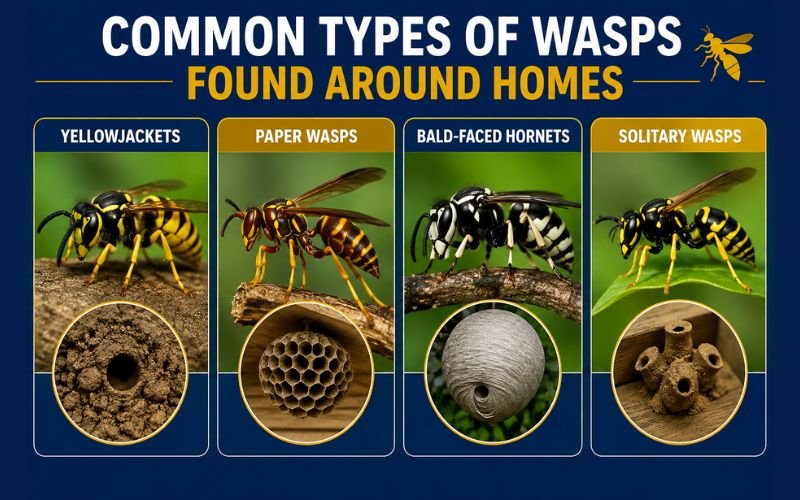
Yellowjackets often have bright yellow and black markings and hard, shiny-looking bodies. They are social wasps. Depending on the species, nests may be underground or inside cavities such as walls and attics. Later in the season, some yellowjackets become strong scavengers around human food and drinks.
Paper Wasps
Paper wasps are usually slender with long legs that hang below the body in flight. Many have brown bodies with yellow markings. They build open paper nests with a single comb, often under eaves, overhangs, beams, supports, garages, or sheds.
Bald-Faced Hornets
Bald-faced hornets are social wasps with dark bodies and pale markings on the face and abdomen. They build enclosed paper nests, often in trees or elevated locations under eaves and similar structures. Because they defend their nests, avoid approaching an active nest.
Solitary Wasps
Solitary wasps do not form the large worker colonies associated with social species. Each female generally manages her own nesting and brood care. Seeing one solitary wasp in a garden does not automatically mean there is a household pest problem.
Wasp vs Bee vs Hornet: How Can You Tell the Difference?
Wasps, bees, and hornets are closely related, but they differ significantly in body shape, hairiness, diet, and nesting habits. Properly identifying stinging insects ensures you take the correct approach for removal and safety. Implementing comprehensive pest control solutions helps protect your home from a wide range of common household pests and stinging insects throughout the season.
| Feature | Wasp | Bee | Hornet |
|---|---|---|---|
|
Body |
Usually slim and smooth |
Often hairier |
Usually a robust wasp body |
|
Waist |
Often narrow |
Less pronounced |
Narrow wasp waist |
|
Food |
Many hunt insects; adults may take sugars |
Nectar and pollen |
Often insects for young; sugars for adults |
|
Nest |
Varies by species |
Varies by bee species |
Often enclosed aerial nest |
How Do Wasps Behave?
Wasp behaviour depends on species and life stage. Social wasps share a nest and divide work among colony members, while solitary wasps live and nest alone. Many wasps are predators and capture insects or spiders to feed developing young. Behaviour can change near a nest because social wasps may defend it.
Are Wasps Aggressive?
Wasps do not spend their day looking for people to sting. The risk can rise when people disturb a nest or enter its immediate area. A nest beside a doorway, patio, stairs, or play area creates more opportunities for contact than a nest high in a tree.
Where Do Wasps Live and Build Their Nests?
Wasps use a wide range of nesting sites. Around Toronto homes, sheltered locations can include:
- Soffits and eaves
- Roof edges and overhangs
- Wall voids
- Attics
- Decks and porches
- Garages and sheds
- Vents and exterior openings
- Trees and shrubs
- Ground cavities
The species determines the exact site. Outdoor nests may cause little conflict when they are away from people, while a nest beside a walkway or building entrance can create repeated contact.
Why Wasps Choose Certain Parts of a House
A suitable nesting site provides shelter, protection, and access. Small gaps can connect insects with protected cavities behind exterior materials. Older homes can have more exterior joints, repairs, vents, and roofline gaps, although age alone does not mean a home has a wasp problem.
What Does a Wasp Nest Look Like?
Wasp nests vary widely. Some have open paper combs, others have a closed outer shell, and some remain hidden inside structures. Many social wasp nests use paper-like material made from plant fibres mixed with saliva.
Paper Wasp Nest
Paper wasp nests have exposed cells and often hang below a sheltered surface such as an eave, overhang, beam, or deck structure.
Yellowjacket Nest
Yellowjacket nests can be hidden underground or inside cavities such as walls and attics, making the source harder to see.
Bald-Faced Hornet Nest
Bald-faced hornet nests have an enclosed paper shell and are often found in trees or elevated locations. Keep away from active nests.
Signs of a Hidden Nest
- Wasps entering the same opening
- Repeated flight activity near one spot
- Buzzing from a wall
- Wasps near a soffit or roofline
- Wasps appearing indoors
- Increasing activity around one part of the house
Why Are Wasps Around My House?
Wasps may visit a property for food, water, shelter, or nesting space. Common attractants include:
- Open food
- Sweet drinks
- Garbage
- Fallen fruit
- Outdoor pet food
- Flowering plants
- Other insects
- Water
- Protected cavities
Why Are Wasps Around My Roof or Soffit?
Soffits and roof edges can offer sheltered spaces or access to cavities. Repeated wasp traffic near one gap can point toward a nest or access route. Watch from a safe distance and note where insects enter and leave. Do not seal an active opening without understanding what is inside.
Why Are Wasps Coming Into My House?
Wasps can enter through exterior openings or emerge from a nest inside a wall or other cavity. A few insects near a window do not prove an indoor nest, but repeated activity around one room or opening deserves more attention.
Why Are There So Many Wasps Around My Home?
Social wasp colonies can become larger as the warm season progresses, making activity more noticeable. Some yellowjackets also become stronger scavengers around food and drinks later in the season.
When Are Wasps Most Active?
Activity depends on species, weather, food, and colony development. Warm conditions generally increase insect movement, and many homeowners notice more activity during warmer parts of the day.
What Do Wasps Eat?
Many wasps hunt insects and spiders, including caterpillars, flies, crickets, and other prey. Adult wasps may also feed on nectar, fruit juices, honeydew, and other sugars. This explains why wasps can appear in gardens as well as around outdoor eating areas.
What Do Wasp Larvae Eat?
Developing larvae often receive protein from insects or spiders brought back by adults.
Do Wasps Eat Other Insects?
Yes. Many wasps are predators, and their hunting behaviour can help reduce other insect populations.
Why Do Wasps Sting?
Stinging is mainly a defence response. Nest defence can make social wasps more defensive when people approach too closely. Do not poke, shake, or open an active nest.
Can Wasps Sting More Than Once?
Many female wasps can sting more than once because their stingers do not work like the barbed stinger of a honey bee. The main concern for homeowners is avoiding disturbance of an active nest.
Are Wasps Dangerous?
A single wasp outdoors does not necessarily create a major home problem. Risk changes when many wasps gather near people or when a nest is located beside a high-traffic area.
When Is a Wasp Nest a Serious Problem?
A nest deserves more attention when it is near a doorway, patio, stairs, play area, or other busy location. Hidden nests inside walls, attics, or occupied spaces also deserve attention.
People with serious insect-sting allergies need extra care. Severe symptoms after a sting require urgent medical attention.
What Happens If Wasps Nest Inside a Wall, Attic or Soffit?
Hidden nests can be difficult to locate. You may see wasps outside without seeing the nest itself. If insects repeatedly enter a wall, attic, soffit, or roof opening, avoid opening or sealing the area yourself. A professional inspection can help identify the source without unnecessary disturbance. If you suspect activity inside your home’s structure, scheduling attic inspection and wildlife proofing can help identify entry points, secure vulnerable spaces, and prevent future pests from nesting inside.
Signs of Wasps Inside a Wall or Attic
- Repeated entry through one exterior opening
- Buzzing from one wall or attic area
- Wasps appearing inside nearby rooms
- Wasps entering roofline gaps
- Repeated activity near vents
- Wasps appearing near upper windows
The Wasp Life Cycle
Wasps have a complete life cycle with egg, larval, pupal, and adult stages. Social species can build annual colonies that grow as workers emerge and take over food gathering and nest care.
- Egg: The queen or female places eggs in cells within the nest.
- Larva: Larvae develop inside protected nest cells while adults provide food.
- Pupa: The insect changes from larva into an adult during the pupal stage.
- Adult Wasp: Adults perform tasks based on species and colony role.
How Long Do Wasps Live?
There is no single lifespan for every wasp because species and colony roles differ. For homeowners, the colony cycle is often more useful than the lifespan of one insect.
Do Wasps Return to the Same Nest?
Many common social wasps build new colonies each year and generally do not reuse the old nest the following season. A protected location can still be suitable for a new nest in a later season.
How to Prevent Wasps Around Your Home
Reduce Food Sources
- Keep outdoor food covered
- Clean sugary spills quickly
- Keep garbage containers closed
- Remove fallen fruit from the yard
Inspect Eaves, Soffits and Rooflines
Look for gaps, damaged materials, and openings during routine maintenance. Do not disturb an active nest.
Maintain Vents and Screens
Repair damaged screens and other openings that can provide insect access.
Monitor Repeated Wasp Activity
A repeated flight path can provide an early clue. Note the location and avoid disturbing the insects.
What Should You Do If You Find a Wasp Nest?
Keep your distance first. Do not poke, shake, or open the nest. Note its location and keep people and pets away when possible.
If the Nest Is Near a High-Traffic Area
Consider professional assessment when the nest cannot be safely avoided, especially near entrances, walkways, patios, or play areas.
If Wasps Are Entering a Wall, Attic or Soffit
Do not seal the opening without understanding what is inside. The source may remain active within the cavity.
When Professional Assessment Makes Sense
Professional help makes sense when activity is repeated, the nest is concealed, access is difficult, or the nest is near a busy part of the property.
How to Get Rid of Wasps Around Your Home
The appropriate response starts with identifying the wasp and locating the activity. Different species use different nest types, so treatment should match the species, nest location, and accessibility.
Avoid disturbing an active nest. For hidden nests, professional assessment is often the safer choice because the source may be inside a building cavity.
Professional Wasp Nest Removal in Toronto
For a Toronto property, a professional assessment may include roof edges, soffits, eaves, vents, wall openings, attic access points, decks, and other likely areas. The exact service method depends on the species, nest location, accessibility, and service requirements. If you notice persistent insect activity or a nest on your property, attempting DIY removal can be hazardous. The safest and most effective solution is to hire professional wasp removal services in Toronto to safely eliminate the nest without putting your family at risk.
What a Wasp Inspection Looks For
- Repeated flight paths
- Entry and exit points
- Visible nest material
- Soffit and eave activity
- Roofline openings
- Wall-void indicators
- Attic activity
- Nearby food sources
What Happens After Treatment?
Activity may not stop immediately after service. Follow-up expectations depend on the nest and treatment method. Ask the provider what activity to expect after service and whether a follow-up visit is needed.
Wasp Removal vs Wasp Prevention
Removal addresses the active problem, while prevention focuses on reducing future access or attraction. The two goals are related but are not the same service.
Wasp Activity Around Toronto Homes
Toronto has green spaces, gardens, mature trees, and many residential property types. The City of Toronto notes that the city supports many pollinators, including wasps. Large green areas such as High Park, the Don Valley, and the Humber Valley sit close to residential neighbourhoods, so insect activity can occur beside ordinary homes.
Neighbourhoods such as North York, Scarborough, Etobicoke, and East York contain varied home types and landscapes. If you need local technicians to inspect your property, explore our wildlife removal services across Toronto to find coverage and assistance in your area
Seasonal Wasp Activity in Toronto
Wasp activity follows species biology and weather. Warm months can bring more visible activity, while late summer can bring increased yellowjacket scavenging around food and drinks.
Relevant Ontario and Toronto Guidance
Toronto provides municipal information about bees, wasps, wildlife, and applicable requirements. Homeowners should also confirm that a pest-control provider is qualified for the service being offered.
Wasp Stings: How to Reduce Your Risk
- Keep away from active nests
- Do not poke or shake nests
- Keep children away from concentrated wasp activity
- Keep pets away from active nests
- Cover outdoor food and sweet drinks
- Keep garbage containers closed
- Avoid disturbing hidden nesting areas
If someone develops severe symptoms after a sting, seek emergency medical care. People with known severe sting allergies should follow their existing medical plan.
Frequently Asked Questions
No. They are related insects, but their body shape, feeding habits, nesting, and behaviour can differ.
They may enter through exterior gaps or emerge from a nest inside a wall or other cavity.
Yes. Some social wasps use wall voids and other protected building cavities.
Yes. Some yellowjackets use attics and other protected cavities.
Roof edges and soffits can provide sheltered spaces or access to cavities.
