Introduction
Chipmunks are small striped rodents that people encounter worldwide, from suburban yards to forests and mountain regions. While they look similar, there are actually many species with slightly different habitats and behaviours.
During wildlife inspections in Toronto homes, technicians often notice that chipmunks build burrows under decks, patios, and garden beds. Homeowners worldwide may see similar patterns of behaviour: digging, storing seeds, and occasionally damaging bulbs or plants.
Understanding the types of chipmunks helps homeowners globally recognize which species may be active on their property and why they are attracted to certain areas. This knowledge is also useful when learning how to get rid of chipmunks.

How Many Types of Chipmunks Are There?
Scientists have identified around 20 species of chipmunks. Most are native to North America, while a few live in parts of Asia.
During inspections, wildlife technicians explain that despite the variety, the Eastern Chipmunk is the species most commonly seen in Canadian neighbourhoods, particularly in Toronto.
Chipmunks worldwide are attracted to areas that provide:
- Gardens and flower beds
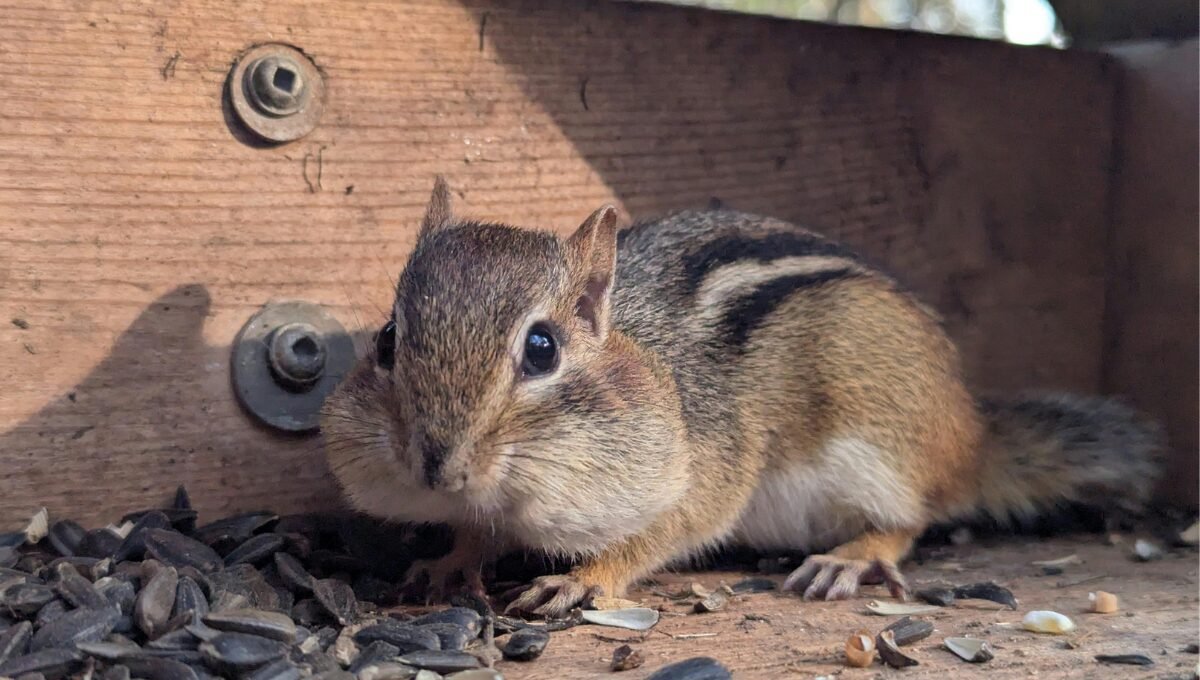
- Bird feeders and fallen seeds
- Wood piles or rock walls
- Areas near patios or decks
Homeowners can also learn more about what chipmunks eat to prevent backyard infestations globally.
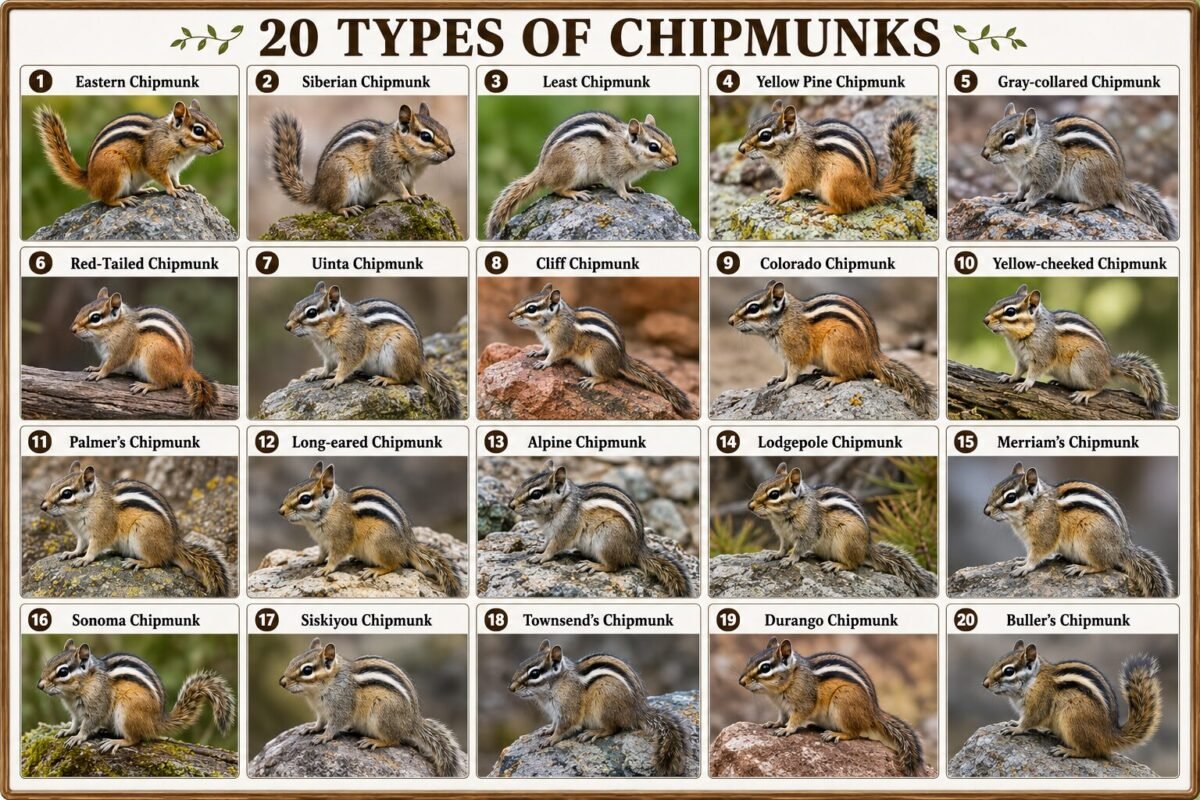
20 Types of Chipmunks
1. Eastern Chipmunk (Tamias striatus)

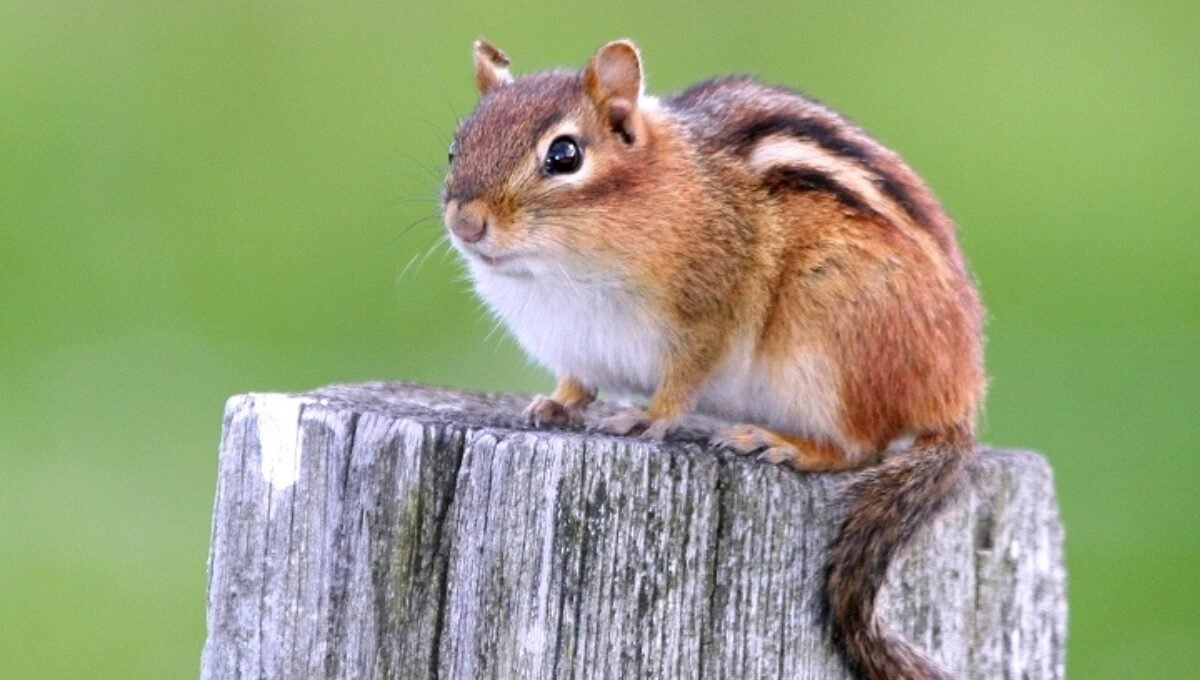
Small, reddish-brown rodent with bold black and white stripes along the back; 20–25 cm including tail. Eastern Chipmunks live in forests, parks, gardens, and suburban areas in eastern North America, including Toronto. They dig complex burrows with multiple entrances, are active during the day, and store seeds, nuts, and fruits; they hibernate in winter but may wake occasionally to eat stored food.
2. Siberian Chipmunk (Eutamias sibiricus)
Small brown rodent with distinct dark stripes and slender body. Native to northern Asia, sometimes escaping into European environments. They climb trees and shrubs, forage during the day, and are often active around human settlements in introduced regions
3. Least Chipmunk (Neotamias minimus)
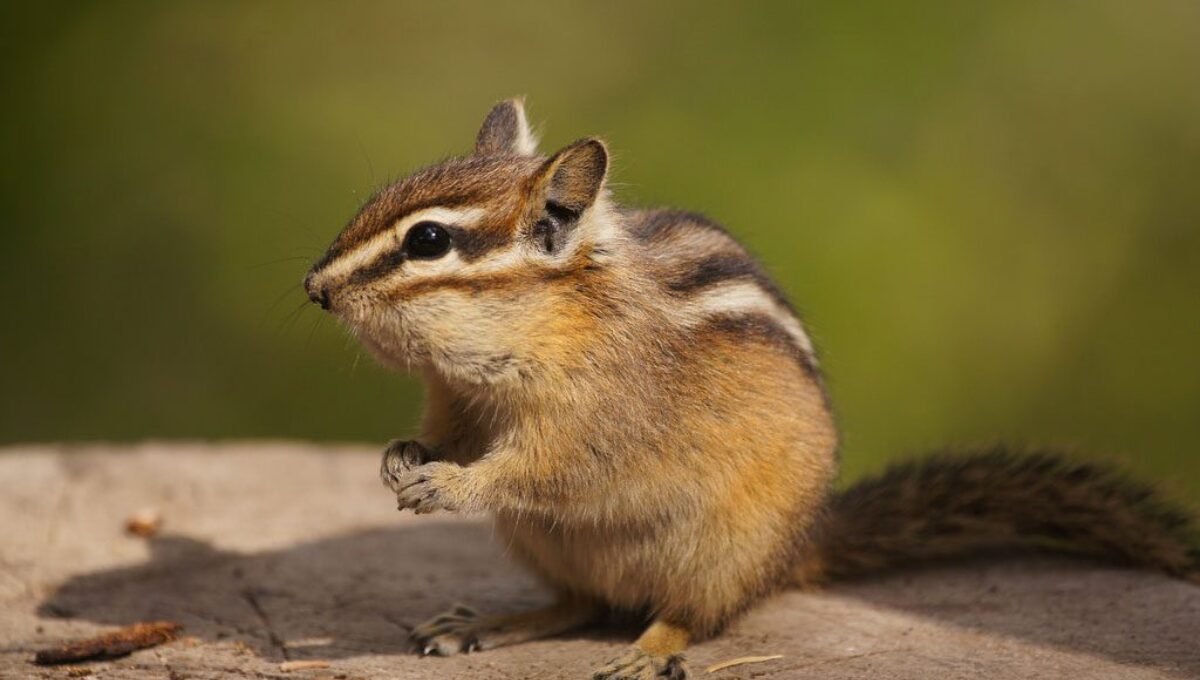
Tiny species, 10–12 cm long; brown fur with five dark stripes. Found in rocky forests, grasslands, and prairies in western Canada and the U.S. They store food in cheek pouches, dig burrows under rocks and shrubs, and are highly alert and quick-moving.
4. Yellow Pine Chipmunk (Neotamias amoenus)
Small brown rodent with pale yellowish stripes. Lives in pine forests and mountainous regions at higher elevations. Diurnal; collects seeds, nuts, and berries; may occasionally be seen near hiking trails and rural gardens.
5. Gray-collared Chipmunk (Neotamias cinereicollis)
Medium-sized rodent with a gray band around the neck and brown body with stripes. Found in mountain forests of southwestern U.S., often in rocky shaded areas. Forages along forest floors; stores pine seeds; agile climber.
6. Red-Tailed Chipmunk (Neotamias ruficaudus)
Brown rodent with a reddish tail and distinct back stripes. Lives in western U.S. forests, including mountainous woodlands. Diurnal; builds burrows with food caches; retreats to rocks or logs when threatened.
7. Uinta Chipmunk (Neotamias umbrinus)
Small brown rodent with white and dark stripes. Found in rocky slopes and forests of the Uinta Mountains. Collects seeds, nuts, and berries; burrows have multiple hidden entrances.
8. Cliff Chipmunk (Neotamias dorsalis)
Medium-sized rodent with striped back; prefers rocky terrain. Lives in cliffs, canyons, and arid mountainous regions. Excellent climber; burrows tucked into rock crevices; stores seeds in small caches.
9. Colorado Chipmunk (Neotamias quadrivittatus)
Brown rodent with four prominent dorsal stripes. Found in Rocky Mountains of Colorado and surrounding high-altitude areas. Digs burrows under rocks and shrubs; caches seeds for winter.
10. Yellow-cheeked Chipmunk (Neotamias ochrogenys)
Brown rodent with yellowish cheeks and back stripes. Inhabits mountainous forests of western U.S. Forages for seeds, berries, and insects; hides food in burrows under rocks.

11. Palmer's Chipmunk (Neotamias palmeri)
12. Long-eared Chipmunk (Neotamias quadrimaculatus)
Brown striped rodent with large ears. Found in forested mountainous areas. Agile and fast; stores seeds in burrows; active during daylight hours.
13. Alpine Chipmunk (Neotamias alpinus)
Grayish-brown with clear stripes; small size. Inhabits high-altitude alpine regions above tree line. Rarely interacts with humans; collects seeds for winter; diurnal.
14. Lodgepole Chipmunk (Neotamias speciosus)
Brown with pale stripes; medium size. Lives in pine forests of western North America. Prefers lodgepole pine areas; collects pine seeds and cones for winter storage.
15. Merriam's Chipmunk (Neotamias merriami)
Medium brown rodent with bold stripes. Found in dry forests and mountainous areas. Active forager; hides seeds and small fruits in burrows; diurnal.
16. Sonoma Chipmunk (Neotamias sonomae)
Small brown rodent with dark stripes. Lives on wooded hillsides of Northern California. Agile; stores seeds under rocks or logs; active during daylight hours.
17. Siskiyou Chipmunk (Neotamias siskiyou)
Medium-sized with brown fur and white stripes. Found in northern California and southern Oregon mountain forests. Builds burrows near shrubs and rocks; diurnal forager.
18. Townsend's Chipmunk (Neotamias townsendii)
Brown rodent with darker stripes and bushy tail. Lives in Pacific Northwest forests. Ground-dwelling; feeds on seeds, berries, and fungi; active during the day.
19. Durango Chipmunk (Neotamias durangae)
Small brown rodent with bold dorsal stripes. Lives in mountainous regions of Mexico. Forages for seeds and berries; builds burrows under rocks or logs.
20. Buller's Chipmunk (Neotamias bulleri)
Brown rodent with distinct stripes. Native to mountainous areas of Mexico. Active during daylight; hides seeds in burrows for winter survival.
Why Chipmunks Appear Around Homes

Although most species live in forests or mountains, yards worldwide provide easy food and shelter.
During inspections in Toronto, chipmunks are attracted to:
- Bird feeders
- Garden vegetables and fruits
- Fallen seeds or nuts
- Wood piles or rock walls
- Soft soil near foundations
This is why homeowners worldwide often look for ways to get rid of chipmunks safely and effectively.
Conclusion
Chipmunks are diverse, with 20 species worldwide. While many live in forests or mountains, the Eastern Chipmunk is most commonly seen in Toronto homes. They dig burrows under decks, patios, and garden beds where food and shelter are abundant. Understanding the different species helps homeowners globally identify wildlife and take preventive measures. Persistent problems can be managed through professional wildlife removal, which locates burrows, traps animals humanely, and prevents long-term damage.
- Alvin, Simon, Theodore, and Brittany (from cartoons and movies).
- Ground squirrels and small squirrels; similar appearance but different behavior.
- Represents a squirrel or chipmunk; symbolizes wildlife, nature, or playfulness.