
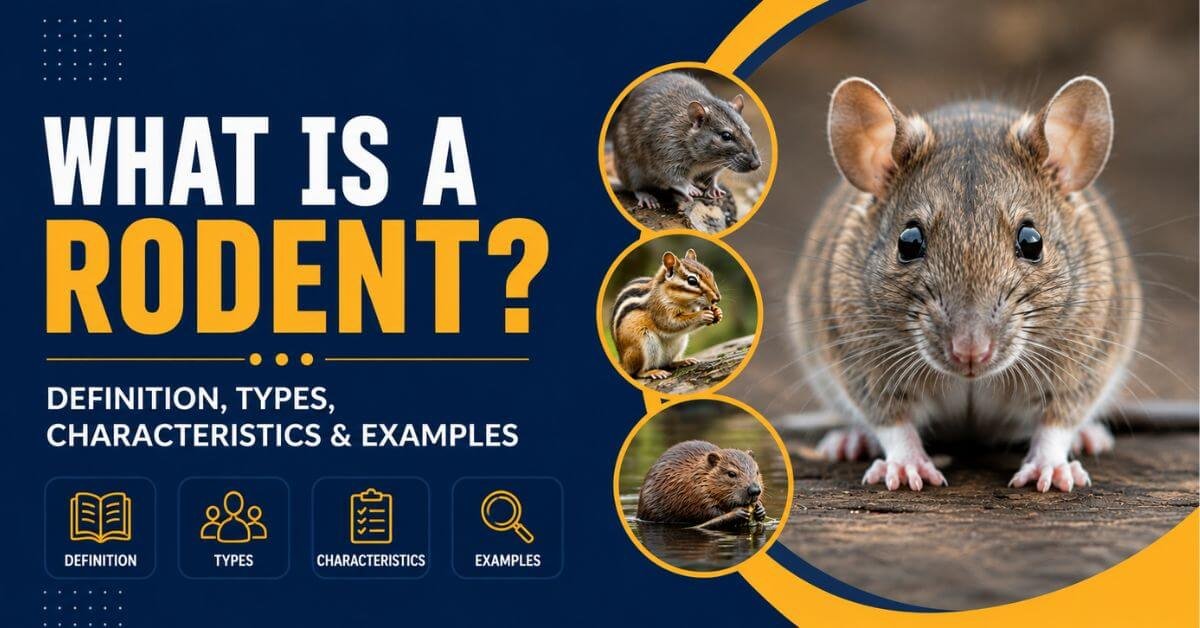
A rodent is a mammal in the order Rodentia. Rodents are mainly recognised by their continuously growing front incisors, which they use for gnawing. Mice, rats, squirrels, chipmunks, beavers and porcupines are all rodents.
They’re also the largest group of mammals on the planet, making up roughly 40% of all mammal species and found on every continent except Antarctica, ranging from tiny mice to large capybaras.
In this article, we’ll break down the definition of a rodent, the different types, their key characteristics, and some common examples.
What Is a Rodent?
A rodent is a mammal belonging to the order Rodentia. This group includes thousands of species with different sizes, habitats, and diets. Mice and rats are rodents, but squirrels, beavers, and porcupines are rodents too.
What Makes an Animal a Rodent?
Rodents have specialised front incisors that continue growing throughout life. Their teeth and jaw structure are adapted for gnawing, helping them feed and naturally wear down their incisors.
Are Rodents Mammals?
Yes. Rodents are mammals and belong to the order Rodentia. They share mammalian traits such as hair or fur and milk production, while their specialised incisors distinguish them as rodents.
Types of Rodents
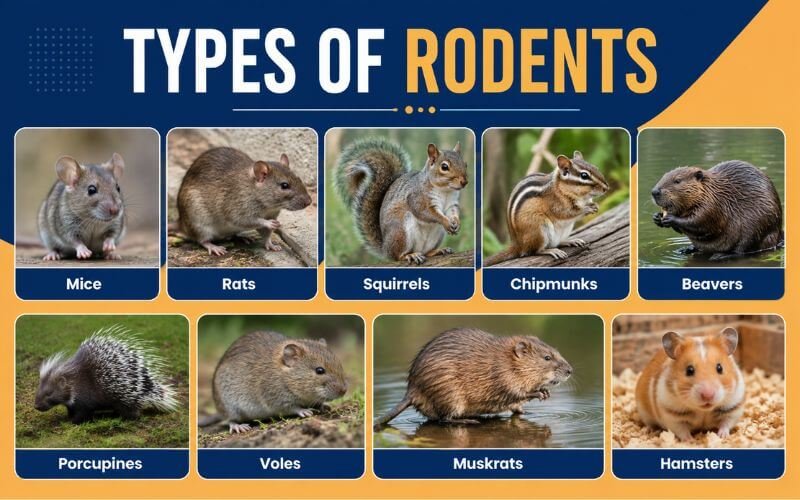
- Mice: Small rodents that commonly live in fields, farms, and buildings.
- Rats: Adaptable rodents often found around urban areas, buildings and other human environments.
- Squirrels: Tree and ground-dwelling rodents known for climbing and their bushy tails.
- Chipmunks: Small striped rodents commonly found around woodland, gardens and ground cover.
- Beavers: Large semi-aquatic rodents that live around rivers, ponds and wetlands.
- Porcupines: Large rodents recognised by their protective quills and plant-based diet.
- Voles: Small, compact rodents that commonly live in grasslands, fields and gardens.
- Muskrats: Semi-aquatic rodents commonly associated with marshes, ponds and waterways.
- Hamsters: Small rodents found naturally in parts of Europe and Asia, with several domesticated species.
Common Rodent Examples
| Rodent | Typical Habitat | Key Characteristics |
|---|---|---|
|
Mouse |
Homes, fields and farms |
Small body and long tail |
|
Rat |
Urban areas and buildings |
Larger body and strong gnawing ability |
|
Squirrel |
Trees, parks and suburbs |
Strong climber and bushy tail |
|
Chipmunk |
Woodlands and gardens |
Small body with stripes |
|
Beaver |
Rivers, ponds and wetlands |
Large aquatic rodent with broad tail |
|
Porcupine |
Forests and wooded areas |
Distinctive defensive quills |
|
Vole |
Fields, grasslands and gardens |
Compact body and short tail |
|
Muskrat |
Marshes and waterways |
Semi aquatic lifestyle |
Where Do Rodents Live?
Rodents live in forests, grasslands, wetlands, farms and cities. Some species adapt well to human environments and may shelter in attics, wall voids, garages, sheds and other protected spaces when food and shelter are available. When rodents begin entering homes or other buildings, professional rodent control can help identify possible entry points and address the problem.
What Do Rodents Eat?
Rodent diets vary by species. Many eat seeds, grains, plants, fruits, and nuts, while some also consume insects or other animal-based foods. Food around homes, such as birdseed, pet food, garbage, and compost, can attract some rodents.
How to Identify a Rodent
Look at the animal’s incisors, body shape, tail, fur, feet and behaviour. Around homes, possible signs include droppings, gnaw marks, nesting material, damaged food packaging, rub marks and small entry openings.
Are All Rodents Pests?
No. “Rodent” is a biological classification, while “pest” describes an animal that causes an unwanted problem. A squirrel or beaver in its natural habitat is still a rodent but is not automatically a pest.
Rodent vs. Rat vs. Mouse: What's the Difference?
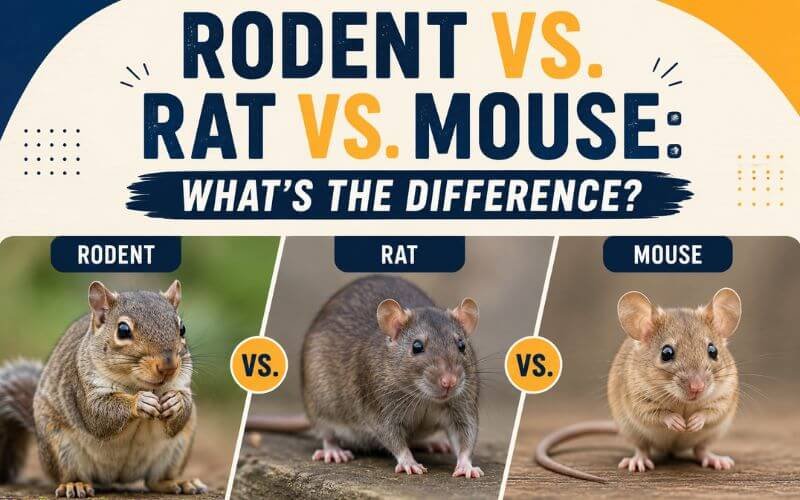
People often use “rodent,” “rat,” and “mouse” interchangeably, but they don’t mean the same thing. “Rodent” is the umbrella term for an entire order of mammals, while rats and mice are two specific, distinct types within that order. Knowing the difference matters, especially when identifying an infestation and choosing the right control method.
Here’s a quick breakdown of how they compare:
| Feature | Rodent | Rat | Mouse |
|---|---|---|---|
|
Category |
Broad order (rats, mice, squirrels, beavers etc.) |
Specific type of rodent |
Specific type of rodent |
|
Size |
Varies widely (tiny to large) |
Larger (15-40 cm body) |
Smaller (5-10 cm body) |
|
Weight |
Varies widely |
150-500g |
12-30g |
|
Tail |
Varies by species |
Thick, scaly |
Thin, long, hairy-ish |
|
Snout |
Varies |
Blunt |
Pointed |
Are Squirrels, Beavers and Porcupines Rodents?
Yes. Squirrels, beavers, and porcupines all belong to Rodentia. They share specialised rodent dental characteristics but have very different sizes, habitats and behaviours.
Why Do Rodents Gnaw?
Rodents gnaw because their front incisors grow continuously. Gnawing helps wear down their teeth and allows them to feed, create shelter, and interact with their surroundings. Around buildings, this behaviour can leave visible marks on materials.
Frequently Asked Questions
A rodent is a mammal belonging to the order Rodentia and is characterised by continuously growing front incisors.
Yes. Mice are rodents and belong to the order Rodentia.
No. Most rodents live in natural habitats, although some species readily adapt to buildings and urban environments.
Yes. Some species, particularly certain mice and rats, can become household pests when they enter buildings and establish activity indoors.
Their front incisors grow continuously, so rodents gnaw to keep the teeth worn down.
