
Squirrels may seem harmless when you see them in your yard, but their breeding season and nesting habits can become a challenge for homeowners. Scratching sounds in the attic or walls often mean a mother squirrel is raising her babies nearby. The problem is that homeowners don’t know when squirrels have babies or how long the young stay in the nest.
From my experience, the lack of knowledge is why many people either try to remove squirrels too early or wait too long before calling a professional. From this guide, you can understand the breeding cycle that helps you to know exactly when it’s safe to take action.
When Do Squirrels Have Babies?
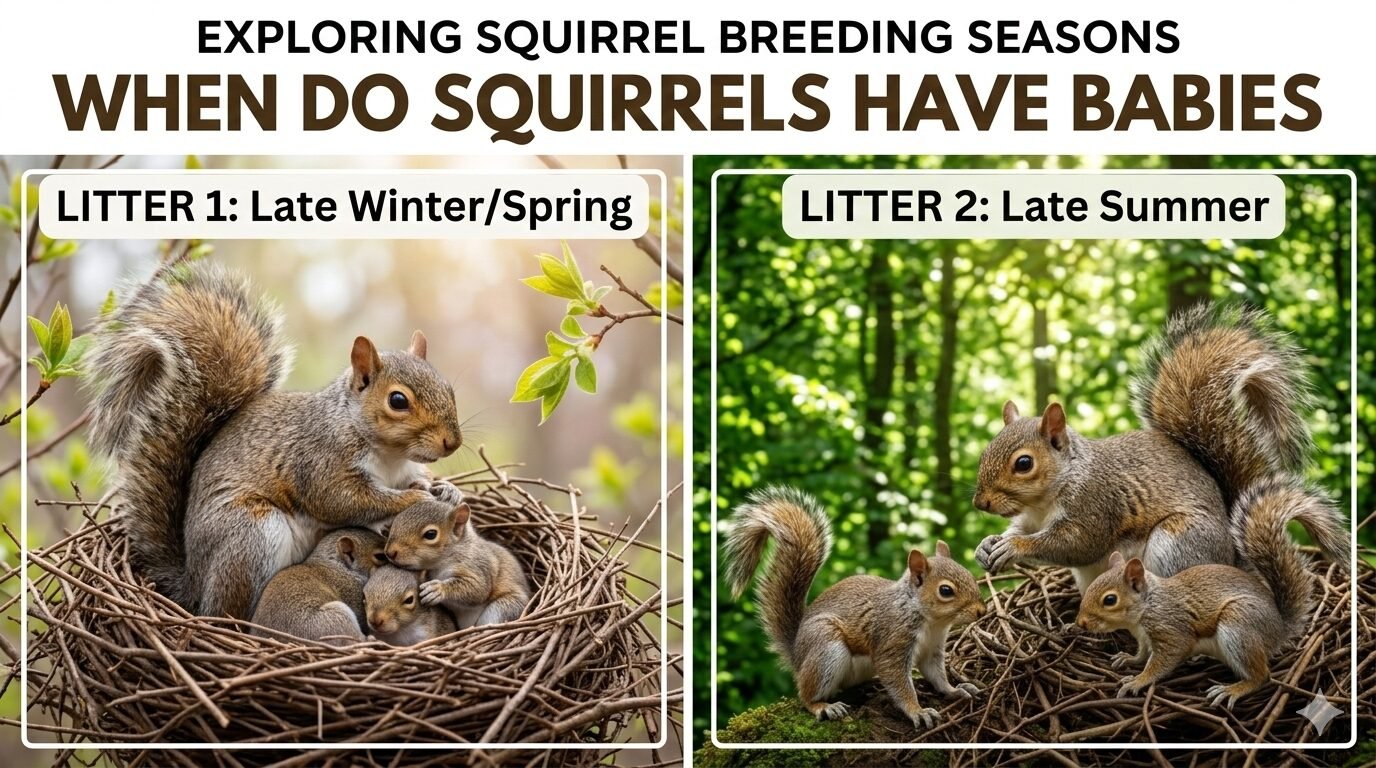
Their breeding season typically occurs twice a year, in late winter and mid-summer. They lead to increased activity as they search for safe nesting spots. Thus, homeowners face problems, such as squirrels invading attics, chimneys, or other sheltered areas of their homes. Squirrels potentially cause property damage and create noise disturbances.
- Late winter breeding (January – March): Babies are born in early spring from March to April.
- Early summer breeding (June – July): Squirrel babies are born in late summer from August to September.
Squirrel gestation period ranges between 38 and 46 days, which means once mating occurs. Newborn squirrels usually arrive about six weeks later. While these periods are common for many species, but a slight difference based on climate change and food supply. In a developed and urban environment, squirrels can be influenced by access to food and a safe nesting spot.
Breeding Seasons For Gray & Red Squirrels
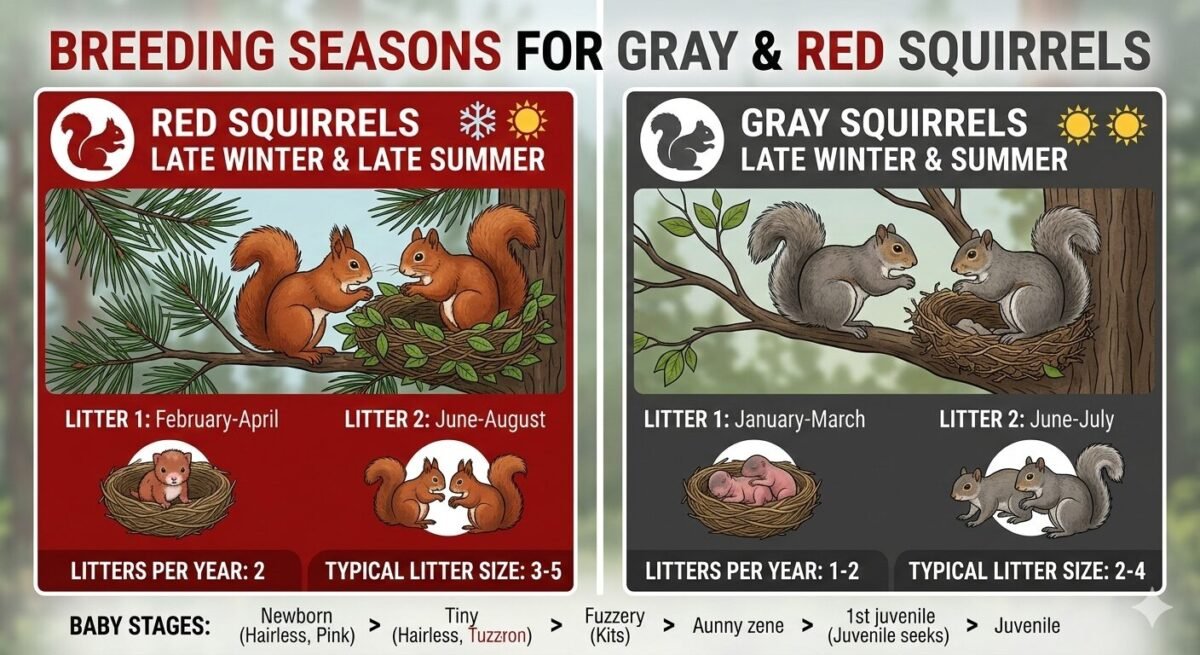
The most common tree squirrel species and their breeding seasons:
Eastern Gray Squirrel
- Breeds twice per year.
- They produce larger litters
- They often adapt to attics and roofs in residential areas.
American Red Squirrel
- Produce smaller litters
- Usually once or twice per year.
- They are more territorial in behaviour.
- Primarily nest in trees but also enter sheds and garages during breeding.
Both species follow seasonal breeding. Especially gray squirrels, they can easily create nests in homes during breeding. So, understanding these differences helps homeowners identify which species may be present and how to handle them.
How Many Babies Do Squirrels Have?
On average, a female squirrel gives birth to 2 to 8 babies per litter, depending on the species. Red squirrels tend to have smaller litters compared to gray squirrels. The young are born blind and dependent, and they stay in the nest for several weeks until they can venture out.
The baby squirrels are called Kits. Also, the unusual activities of multiple kits are common during breeding. Thus, removing the nest without proper knowledge can be dangerous for both the babies and the mother squirrel. Contact a professional wildlife removal service to ensure the kits remain safe while preventing your home.
What Does a Newborn Squirrels Look Like?
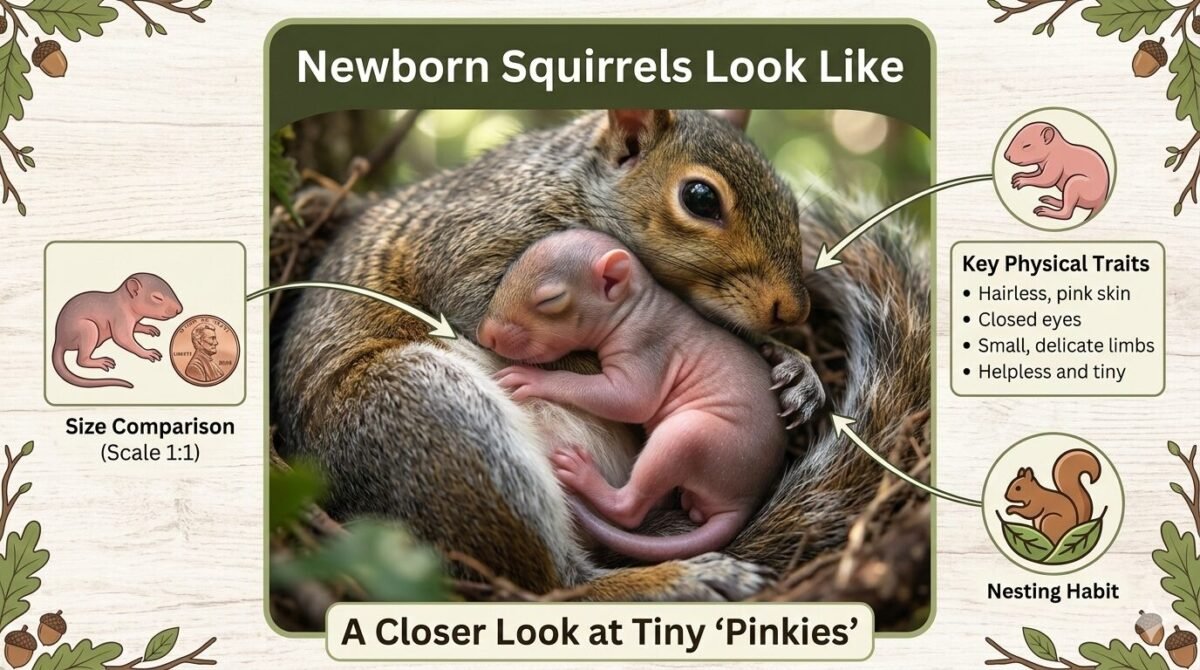
Kits are extremely vulnerable and tiny at birth. They are hairless, blind, and weigh only about an ounce. Their ears are closed, and they rely entirely on their mother for warmth and nourishment. Over the next few weeks, they gradually develop fur, open their eyes, and begin to explore their surroundings as they grow stronger. Moreover, they have delicate pink skin.
Factors Influencing Squirrel Breeding
Seasonality
Squirrels usually have two breeding seasons each year. These periods are best for raising babies. During these times, squirrel nests are more active, so you can suspect movement easily.
Temperature
Temperature plays a crucial role during breeding. Warm weather influences female squirrels to create a nest early. Whether cold temperatures can delay the pregnancy.
Food Availability
Squirrels create shelters where they can catch food easily. They become healthier and more likely to have larger litters when they feed nuts, seeds, fruits, and other things.
Photoperiod
Photoperiod, or the length of daylight, tells squirrels when it’s time to mate. As the days get longer in spring and early summer, hormonal changes prepare them for pregnancy.
By managing these factors, homeowners can reduce the chance of squirrel nesting in their homes. Inspect attics and garages before squirrels create a nest and produce newborns. These simple precautions help prevent your property.
When Do Baby Squirrels Leave the Nest?
Baby squirrels or kits typically leave the nest when they are around 10-12 weeks old. At this stage, they are more independent, able to forage for food, and have developed the necessary survival skills. However, they may still stay close to their mother for guidance and protection during this period. Therefore, a professional can safely relocate them without any harm.
What Do Baby Squirrels Sound Like?
Newborn baby squirrels make high-pitched squeaking sounds to signal hunger or distress. As they grow, their vocalizations become more varied, including chirps and soft cries, to communicate with their mother. These sounds help the mother locate and care for them, especially when they are still dependent and learning to navigate their environment.
How to Prevent Squirrel Nests?
Early inspection of attics and roof space is easier than dealing with an active nest. While disturbing nests without professional help can harm young, it is against wildlife regulations. Some effective prevention tips:
- Keep food sources like bird feeders secure.
- Inspect the dark corners of your home daily.
- Seal every gap and entry point in your home.
- Trim tree branches that provide easy access to your home.
When To Call Professional Help?
Knowing when to call professional help is crucial, especially during squirrel breeding season. Whenever you notice these signs, you should contact wildlife services:
- Unwanted noise that suspect active nest.
- Visible baby squirrel in your home.
- Nesting material in your vents, soffits, and roof space.
- Strong odor from your food area.
Are You Struggling With Squirrel Problems in Toronto?
Many homeowners in Toronto are dealing with squirrel infestations due to the green spaces and urban wildlife. These wildlife can cause property damage, chew through wiring, and create health risks. Our humane & professional wildlife services can safely remove squirrels, seal entry points, and provide long-term prevention strategies to protect your home effectively.
- Whenever you notice squirrel activities, especially in breeding season, contact our team for emergency service all over Toronto.
Conclusion
Squirrels, during their breeding season, create a nest in attics and garages. So, understanding when squirrels have babies and when to contact wildlife services is crucial for every resident. You should never ignore any sign of squirrel infestation in your space. For safe and reliable squirrel removal service, you can contact wildliferemovalpro.
Yes, but it’s rare. Squirrels usually bite only if they feel threatened or trapped, so avoid DIY methods.
Mother squirrels feed their newborn squirrels, so as they grow, they slowly start eating fruits, seeds, and small nuts.
Both mainly eat nuts, seeds, fruits, and tree buds. Gray squirrels prefer acorns and tree nuts, while red squirrels often eat pine cones and conifer seeds.
Baby squirrels drink their mother’s milk, while adult squirrels don’t need milk to grow up.
Squirrels’ nests are made of twigs, leaves, and soft material. If babies are inside, the nest is lined with extra insulation for protection.
